

 Feed back
 Privacy Policy
Soul's Compass.
The zodiac is an ancient celestial coordinate system used in astrology to map the positions of the Sun, Moon, and planets at specific times—especially at birth. Rooted in Babylonian astronomy around the 5th century BCE, the zodiac was later refined by Greek astronomers and integrated into Hellenistic astrology. It divides the ecliptic—the apparent path of the Sun across the sky—into twelve equal segments of 30 degrees each, forming a complete 360-degree circle known as the **full zodiac wheel**. Each segment corresponds to one of the **12 zodiac signs**, named after constellations that lie along this path.
In modern astrology, the zodiac serves both symbolic and practical purposes. Many people consult their sun sign (the zodiac sign the Sun was in at their time of birth) for insights into personality traits, emotional tendencies, and compatibility with others. While not scientifically validated, zodiac-based interpretations are widely used in daily horoscopes, relationship advice, and self-reflection practices. The **all 12 zodiac signs** together represent a cyclical journey of human experience—from action and initiative (Aries) to closure and intuition (Pisces)—mirroring seasonal changes and archetypal growth patterns.
The **full zodiac wheel** is more than just a list of signs; it's a symbolic framework that reflects balance, progression, and interconnectedness. Each sign builds upon the previous one, creating a continuous narrative of development. This circular model also integrates elements such as fire, earth, air, and water, as well as modalities like cardinal, fixed, and mutable—which help further classify the signs based on shared qualities and behavioral tendencies.

Understanding the **names of all zodiacs** provides a foundational knowledge of astrology. Listed in order around the zodiac wheel, starting from the vernal equinox (around March 21), the **all 12 zodiac signs** are:
These date ranges are approximate and may vary slightly from year to year due to leap years and astronomical variations. Most individuals identify with their "sun sign," determined by their birth date.
Each zodiac sign carries symbolic meaning derived from mythology, nature, and celestial observation:
These symbols are not merely decorative; they encapsulate core themes associated with each sign’s energy and archetype.
One of the key ways astrologers understand the **zodiac signs and elements** is through the four classical elements: **fire, earth, air, and water**. These **astrological elements** group the 12 signs into sets of three, with each element influencing temperament, emotional expression, and interaction style.
- **Fire Signs**: Aries, Leo, Sagittarius
Fire signs are dynamic, passionate, and action-oriented. They thrive on inspiration, enthusiasm, and self-expression. Often seen as natural leaders, they initiate change but may struggle with impulsiveness or impatience.
- **Earth Signs**: Taurus, Virgo, Capricorn
Grounded and practical, earth signs value security, material comfort, and tangible results. They are reliable, detail-focused, and prefer slow, steady progress over rapid change.
- **Air Signs**: Gemini, Libra, Aquarius
Air signs are intellectual, communicative, and social. They process life through thought, dialogue, and ideas. While excellent at networking and problem-solving, they may sometimes appear detached or overly analytical.
- **Water Signs**: Cancer, Scorpio, Pisces
Emotional depth defines water signs. They are intuitive, empathetic, and deeply connected to feelings—both their own and others’. However, they can be sensitive to criticism and prone to mood fluctuations.
The interplay between these elements helps explain interpersonal dynamics. For example, fire and air generally support each other (air fans the flames), while water and fire may clash unless balanced. Similarly, earth and water combine well (water nourishes soil), but air and earth may find communication challenging. Understanding **zodiac signs and elements** offers insight into personal strengths and potential areas of friction in relationships.
Beyond elements, another critical classification system explains **how zodiac signs are grouped** through modalities—also known as qualities. There are three modalities: **cardinal, fixed, and mutable**. Each modality appears four times across the zodiac, once in each element, shaping how signs approach change, motivation, and responsibility.
- **Cardinal Signs**: Aries, Cancer, Libra, Capricorn
Cardinal signs initiate action and lead transitions. Positioned at the start of each season (Aries = spring, Cancer = summer, etc.), they are natural starters, full of vision and drive. However, they may lose interest once the initial momentum fades.
- **Fixed Signs**: Taurus, Leo, Scorpio, Aquarius
As the name suggests, fixed signs provide stability and endurance. They resist change but excel at seeing projects through to completion. Loyal and determined, they bring consistency—but can become rigid or resistant to new ideas.
- **Mutable Signs**: Gemini, Virgo, Sagittarius, Pisces
Mutable signs adapt easily and bridge transitions between seasons. They are flexible, versatile, and skilled at managing change. Yet, their openness to multiple perspectives can make decision-making difficult.
Understanding **how zodiac signs are grouped** by modality reveals deeper behavioral patterns. For instance, a cardinal fire sign (Aries) acts quickly and boldly, while a fixed fire sign (Leo) sustains passion over time. Recognizing these differences enhances self-awareness and improves teamwork, leadership, and conflict resolution in personal and professional settings.
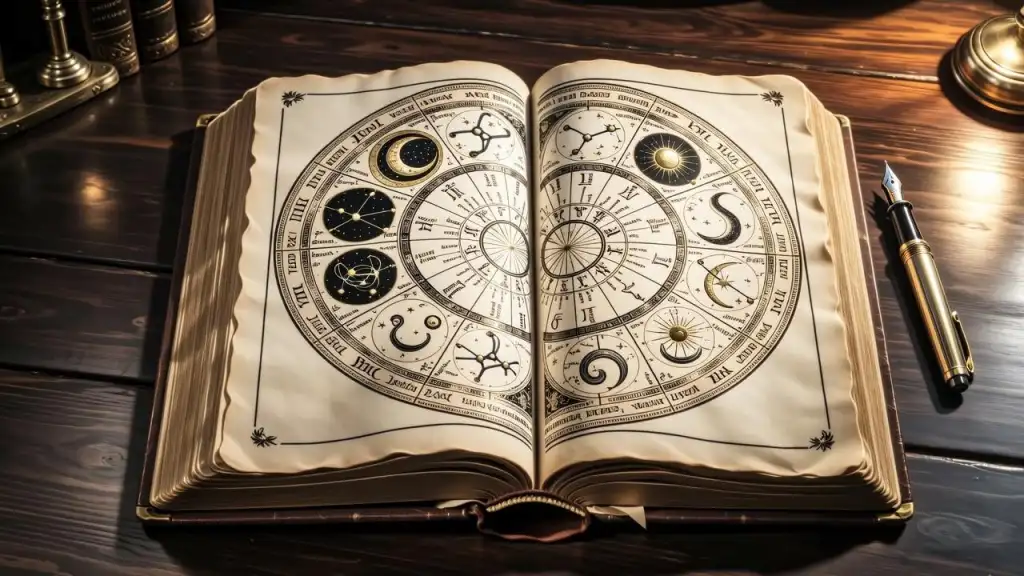
The **full zodiac wheel** is a comprehensive visual tool used in astrology to depict the entire zodiac system in a circular format. Divided into 12 equal 30-degree segments, it represents a complete cycle of consciousness and cosmic energy. Unlike linear models, the circular layout emphasizes continuity, rebirth, and the interconnected nature of life stages.
Each section of the wheel corresponds to a zodiac sign, but the chart extends beyond sun signs. In a natal or **birth chart basics**, the wheel maps the precise positions of all major planets (Sun, Moon, Mercury, Venus, Mars, Jupiter, Saturn, Uranus, Neptune, Pluto) at the moment of an individual’s birth. These placements fall within the 12 astrological houses—each representing different areas of life such as career, relationships, health, and spirituality.
For example, someone might have their Sun in Leo (identity and ego), Moon in Cancer (emotions), and rising sign (Ascendant) in Libra (outer personality). When interpreted together, these components form a holistic profile far more nuanced than a single sun sign reading.
The **zodiac chart** also includes aspects—geometric angles between planets—that indicate how different parts of the psyche interact. Conjunctions (0°), trines (120°), and squares (90°) reveal harmonious or challenging dynamics, offering predictive and psychological insights.
Modern astrologers use software tools like Astro.com or Kepler to generate accurate charts. According to a 2023 report by the *International Society for Astrological Research (ISAR)*, over 60% of practicing astrologers globally rely on digital platforms for chart calculations, ensuring precision and accessibility.
Knowledge of the **all 12 zodiac signs**, including their **zodiac signs and elements** and **how zodiac signs are grouped**, can serve as a valuable tool for self-awareness and improved relationships. By understanding your own sign’s strengths and challenges, you can make more informed choices about career paths, communication styles, and emotional regulation. Similarly, recognizing the traits of friends, partners, or colleagues based on their signs may foster empathy and reduce misunderstandings.
For instance, knowing that a Virgo partner values organization and constructive feedback can improve communication, while understanding that a Sagittarius friend craves adventure and honesty can strengthen trust. Couples counseling services like those offered by MindPeers in India increasingly incorporate astrological compatibility assessments as supplementary tools—not as replacements for therapy, but as conversation starters.
However, it is important to acknowledge the **limitations and scientific perspective on astrology**. Major scientific organizations, including NASA and the American Astronomical Society, emphasize that astrology lacks empirical evidence and does not meet criteria for scientific validity. Psychological studies, such as those reviewed by the *Committee for Skeptical Inquiry*, suggest that perceived accuracy in horoscopes often results from the Barnum effect—a tendency to accept vague, general statements as personally meaningful.
Therefore, while exploring the **full zodiac wheel** can be insightful and culturally enriching, it should complement—not replace—evidence-based decision-making. Readers are encouraged to explore reputable sources such as ISAR, the *Journal of Astrology & Psychology*, or certified courses from institutions like the Faculty of Astrological Studies (UK) for deeper learning.
Disclaimer: The content related to 12 Zodiac Signs in this article is provided for informational and educational purposes only and does not constitute professional advice in psychology, astronomy, or any other field. Decisions involving health, relationships, or career should be made after consulting qualified experts. The author and publisher disclaim any liability for actions taken based on the information presented herein.
Arjun Mehta
|
2025.11.26


